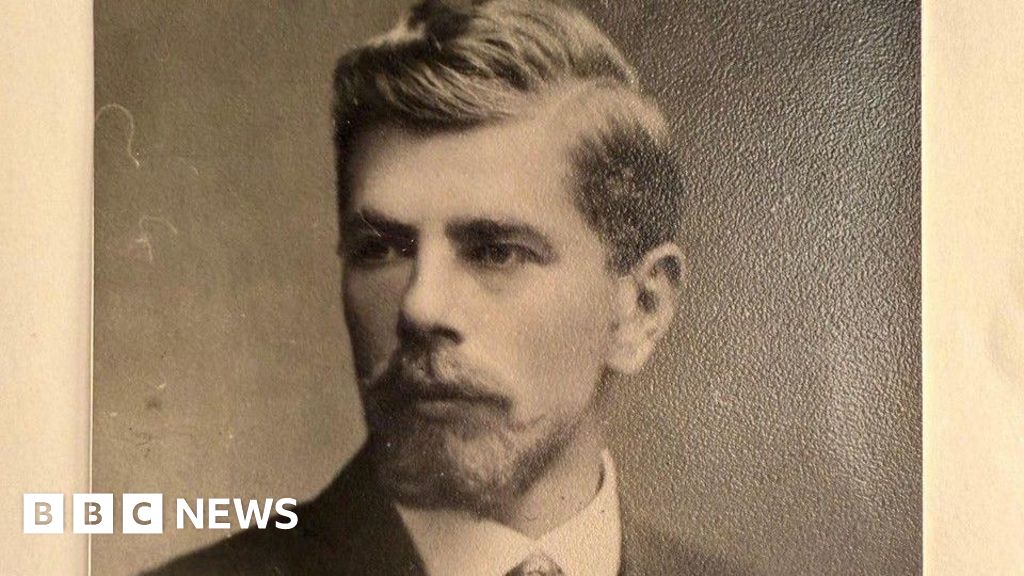
Nazi search engine shows if ancestors were in Hitler's party
BBC Newsen
A groundbreaking new online search engine launched by German newspaper Die Zeit has allowed millions of people to uncover hidden family histories, revealing whether their ancestors were members of Adolf Hitler's Nazi Party.
The digital tool, created in cooperation with archives in Germany and the United States, grants the public access to several million Nazi Party membership cards known as the "NSDAP-Mitgliederkartei". Christian Rainer, a former editor of the Austrian news magazine profil, told the BBC he found the name of his grandfather "within a few seconds". "I found out that he became a member of the Nazi Party around 21st of April 1938, just a few days after the Anschluss," when Adolf Hitler annexed Austria to Germany, he said. "He applied to become a member of the NSDAP (Nazi) Party, just five days after it became legal in Austria," Rainer added.
Rainer never met his grandfather, who died shortly before he was born in 1961. "I always knew that he was close to the Nazis, but I was surprised that it only took him five days" to join them, he said. "He was an academic," Rainer added. "He should have known in 1938 who the Nazis were." Beyond exposing his grandfather's past, the search engine also provided a measure of relief by clearing other family members. "I was happy I didn't find anyone else from my family, especially not my father. I had never suspected him of being a Nazi. He was drafted into (the Wehrmacht) in 1941 and wounded few times," he said.
The public response to the database has been profound. Die Zeit said the response to the search engine has been "overwhelming". It has been "accessed millions of times and shared thousands of times" since it was launched at the beginning of April, said Judith Busch, spokesperson for Die Zeit. The emotional weight of these discoveries was captured by one user who wrote on Die Zeit's website: "I've already found two close relatives, which destroys the myth that no one in our family was involved." "To have my perspective changed at the age of 71 is a bitter shock."
Between 1925 and 1945, approximately 10.2 million Germans became members of the party. The physical membership cards, originally stored at the Nazi headquarters in Munich, narrowly escaped destruction in the final days of World War II. With Hitler's Reich in ruins, orders were issued to pulp the records, but they were rescued by Hanns Huber, the director of a nearby paper mill, who subsequently handed them over to American forces. These cards became instrumental in the post-war de-Nazification process.
For nearly 50 years, the documents were maintained by the Americans at the Berlin Document Center. In 1994, the collection was transferred to the German Federal Archives, with microfilm copies sent to the US National Archives in Washington DC. Until recently, investigating family ties to the regime required a formal request to the German Archives. However, in March of this year, the US Archives began making its records available online, prompting Die Zeit to obtain the data and back up the documents to make them easily searchable.
Rainer noted that this newfound accessibility has shifted historical research from broad institutional studies to deeply personal quests. Previously, research focused on "higher-ranking people who became politicians, judges or doctors later on", he told the BBC. "A lot of people now are searching for family members so it's a very individual thing now." "Eight decades on, after the end of the World War, you can still find out truth that you haven't known before," he said.
Source: BBC News
Related articles

Watch: Vance heckled as he chides Pope
US Vice-President JD Vance was heckled at a Turning Point USA event while criticizing Pope Leo for his comments on theol…
BBC News
Trump hints Iran talks could resume this week as US port blockade continues
President Donald Trump has indicated that negotiations to end the conflict with Iran could resume this week following th…
BBC News
250 missing after migrant boat sinks in Indian Ocean
Around 250 Rohingya refugees and Bangladeshis are missing after their overcrowded boat sank in the Andaman Sea during a …
BBC News
Three years of messages at once - a chronicle of Sudan's war pours in as trapped reporter's phone turns on
Sudanese journalist Mohamed Suleiman, trapped for three years in the besieged city of el-Fasher without phone service, b…
BBC News
Man wins €1m Picasso painting in €100 charity raffle
A Paris-based engineer won a €1m Picasso painting after buying a €100 ticket in a global charity raffle that raised appr…
BBC News