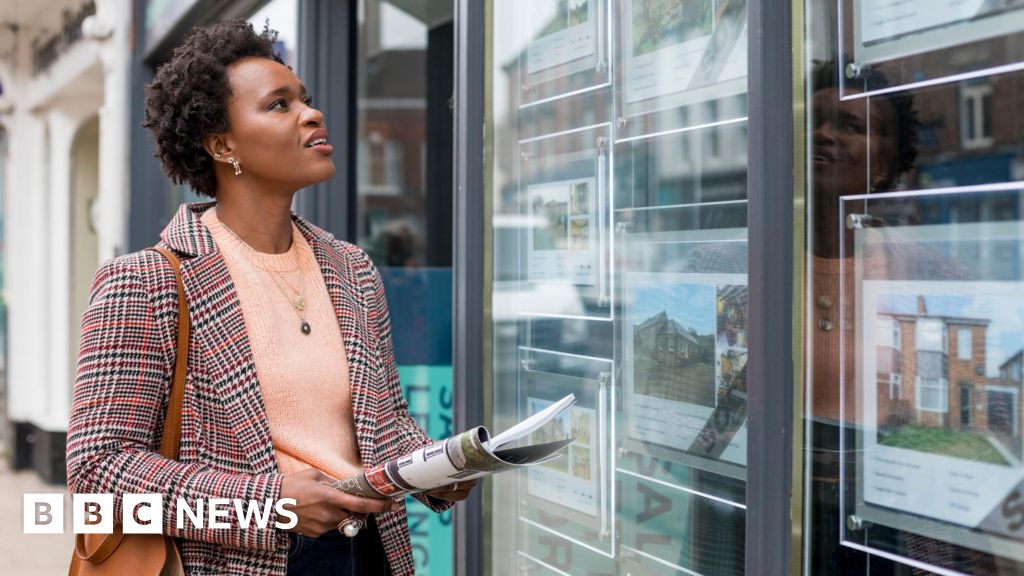
Help to Buy mostly helped high earners, IFS says
BBC News Businessen
A flagship government loan scheme designed to help first-time buyers in England primarily benefited higher earners in areas with cheaper housing and had a "limited impact" on social mobility, according to a damning new report from the Institute for Fiscal Studies (IFS).
Introduced in 2013 by the Conservative government, the Help to Buy scheme was intended to assist individuals lacking family wealth by providing government-backed loans for house deposits and increasing mortgage availability. The policy comprised a mortgage guarantee scheme, which increased access to 5% deposit mortgages, and an equity loan scheme offering a 20% government loan on new-build properties. While the equity loan schemes have now closed to new applicants in England and Scotland—and are set to close in Wales in September—the mortgage guarantee element has been made permanent across the UK.
Despite supporting around a fifth of first-time buyer purchases in England at its peak in 2014–15, the IFS found that "Help to Buy made only a limited difference to housing affordability". The research was conducted "given calls for the reintroduction" of the loan scheme and echoes previous criticisms from the official government watchdog. The think tank noted that because the equity loan was restricted to new builds—which were "relatively rare in most areas"—it failed to make homes broadly affordable as intended.
Furthermore, the IFS demonstrated that the more a buyer earned, the more the scheme helped, concluding that it "increased maximum affordable prices most among those who could already afford higher prices". In the early 2010s, buyers were primarily constrained by income-based mortgage limits rather than deposit sizes. Consequently, the loaned deposit had a "limited effect" on affordability, as participants frequently secured last-minute help from friends and family anyway.
The scheme was notably less beneficial to buyers in London and the South East due to higher property prices and fewer available homes within the scheme, meaning higher earners in cheaper areas gained the most. "Help to Buy policies can help first-time buyers get on the housing ladder, in theory, but can also push up house prices," said Bee Boileau, a research economist at IFS.
Despite the criticism, defenders argue the initiative successfully got people on the property ladder and stimulated construction. "The scheme was a major factor in the doubling of housing supply that occurred in the few years following its introduction, creating tens of thousands of jobs and leading to a boom in the supply of affordable housing provided through private sector cross-subsidy," the Home Builders Federation said.
Shadow housing secretary James Cleverly added that the Conservative policy "gave many thousands of people the chance to realise the dream of homeownership". A spokesperson for the Department of Housing, Communities and Local Government noted that the scheme was both introduced and closed by the previous government and that "an evaluation of the scheme is ongoing". "While we have no current plans to introduce a new Help to Buy scheme, we have launched a comprehensive mortgage guarantee scheme that will open the door to homeownership for more young families and hardworking renters," the spokesperson said.
Source: BBC News Business
Related articles

Households could get free electricity for doing washing on sunny weekends
Households and businesses in Britain could receive free or discounted electricity for using appliances during periods of…
BBC News Business

Amazon to spend $11bn on satellite firm in growing Starlink rivalry
Amazon announced an $11.57 billion deal to acquire satellite firm Globalstar, marking a major escalation in its rivalry …
BBC News Business
UK faces biggest hit to growth from Iran war of major economies, IMF says
The International Monetary Fund has cut its UK growth forecast to 0.8%, warning that the energy shock from the Iran war …
BBC News Business

Oil prices continue to fall on hopes of new US-Iran peace talks
Oil prices fell sharply on Tuesday as hopes of renewed US-Iran peace talks eased supply disruption fears following Monda…
BBC News Business
Fuel prices stop rising after 43 days of increases, RAC says
Fuel prices have halted a 43-day consecutive increase following a temporary Gulf ceasefire that lowered crude oil costs,…
BBC News Business